Boldness
Boldness and its costs

“IT is a trivial grammar-school text, but yet worthy a wise man's consideration. Question was asked of Demosthenes, what was the chief part of an orator? he answered, action; what next? action; what next again? action.”
Why is it that simple action is more effective than intellectual rigor, quality of argument, and elocution. We are creatures defined by our intelligence?
“But the reason is plain. There is in human nature generally, more of the fool than of the wise; and therefore those faculties, by which the foolish part of men's minds is taken, are most potent.”
We humans are more stupid than we are smart. Fortune favors the bold.
“Nay, you shall see a bold fellow many times do Mahomet's miracle. Mahomet made the people believe that he would call an hill to him, and from the top of it offer up his prayers, for the observers of his law. The people assembled; Mahomet called the hill to come to him, again and again; and when the hill stood still, he was never a whit abashed, but said, If the hill will not come to Mahomet, Mahomet will go to the hill.”
In this passage, Bacon foreshadows an image of the modern startup founder and the perfect pivot. Founders are bold. But sometimes that boldness is humbled by the reality of the world.
“but with bold men, upon like occasion, they stand at a stay; like a stale at chess, where it is no mate, but yet the game cannot stir. But this last were fitter for a satire than for a serious observation. This is well to be weighed; that boldness is ever blind; for it seeth not danger, and inconveniences. Therefore it is ill in counsel, good in execution; so that the right use of bold persons is, that they never command in chief, but be seconds, and under the direction of others. For in counsel, it is good to see dangers; and in execution, not to see them, except they be very great.”
Bold people thrive on momentum. Startups, too, thrive on momentum. When a startup loses its momentum, it may die. It is difficult to stay innovating and bold as a person and as a startup.
- Francis Bacon, The Essays or Counsels, Civil and Moral
Tal’s Boldness
In chess, if your opponent launches a bold attack, the best way to extinguish their efforts is by killing their momentum.
In General Personal Embeddings, I started the essay by describing what I find so inspiring about Mikhail Tal, “the magician from Riga.” Tal is heroic because he trusts his instincts, I believed. Truly, Tal is great because he is bold. He played with the vigor of a young man up until his old age. He never played for a draw. He played to win. He thrived on creating destabilizing moments to capitalize upon. He won on momentum. Tal says,
"to play for a draw, at any rate with White, is to some degree a crime against chess."
What is more inspiring about Tal is the fact that he did so well playing in this manner. It’s almost an anti-strategy strategy. Different games demand different strategies, but chess is theoretically not a game to be bold in, since we are more stupid than we are smart, it is better to be precise and simple. Tal is heroic because he is bold in a domain where any smart person would tell you boldness is a losing strategy. I’d like to build my businesses with the boldness of Tal.
But this is an art. Every bold move is an irrational leap into the unproven. It requires moments of genius. It requires the human mind to tap into the creative brilliance and instincts that are beyond our own understanding. To build a business like this requires the recognition of the practical grounding truth of the universe but also the creative genius that we can unearth from ourselves. This type of work is difficult to do for two different reasons. First off, taste in ideas and where to allocate your limited focus and resources is hard in a way that there is no formula. And then the practical realities of engineering spit in your face anytime you want to actually build said ideas.
Engineering as a Humbling Force
I honestly don’t know what causes someone to want to be an engineer. Are they masochists? If I ask my friends from high school, it seems like they just knew that engineers make a lot of money. This is the wrong reason to become an engineer and why many engineers learn to solve problems but never have any idea which ones to solve. Many of the great engineers simply love the process of solving problems.
The reason to become an engineer is because it is simply important and required. You got an idea? Okay, well who’s going to build it? You are not going to abduct a great engineer from your local university library.
You need to become the great engineer.
But engineering is a humbling force. I have had product visions for Jean where the solution was simply not possible to build, or it then took me months to do so. But recently, there have been sparks of moments where I have built creative back-door solutions. One way to win in the world is simply to be a better problem solver than others. 100 idea guys are beaten by one earnest engineer who can actually build the damn thing. The model of YC is likely just to fund these people. If you go on different developer forums like StackExchange, you will find where these people live. They are impressive people that you want on your team.
I have before said that great engineering is the bottleneck of progress. This is a slight mischaracterization. Great engineering is the fuel of progress and these bold visions. Ideally, you are a bold founder starting a bold company with a bold vision with a bold culture made up of bold employees that has the engineering prowess to solve any impossible problem.
This is the fuel of Silicon Valley that a value investor simply cannot fathom. What are you investing in, there’s no product aghhhh?!?! You are investing in great people who can figure anything out, who’s natural progression is working on bold important problems with the incredible capacity to solve them.
Where big companies may see these opportunities, they are so hamstrung by their own mediocrity of success and lack of boldness and conviction that they cannot win. It is hard to be constantly reinventing oneself. I haven’t read The Innovator’s Dilemma, but I assume it just sums up this cold truth.
Solving Impossible Problems
As the startup, it is hard to stay bold and ambitious when you’re slogging through a bug for a week straight and want to jump off a bridge. I read once that Paul Graham loved problems like this, however, and equated them to a fat person chasing a lean person up the stairs (the hard way) vs down the stairs (the easy way). He always found delight in running up the stairs towards impossible problems, since he knew that the fat companies couldn’t chase him.
“Use difficulty as a guide not just in selecting the overall aim of your company, but also at decision points along the way. At Via web one of our rules of thumb was run upstairs. Suppose you are a little, nimble guy being chased by a big, fat, bully. You open a door and find yourself in a staircase. Do you go up or down? I say up. The bully can probably run downstairs as fast as you can. Going upstairs his bulk will be more of a disadvantage. Running upstairs is hard for you but even harder for him. What this meant in practice was that we deliberately sought hard problems. If there were two features we could add to our software, both equally valuable in proportion to their difficulty, we’d always take the harder one. Not just because it was more valuable, but because it was harder. We delighted in forcing bigger, slower competitors to follow us over difficult ground. Like guerillas, startups prefer the difficult terrain of the mountains, where the troops of the central government can’t follow. I can remember times when we were just exhausted after wrestling all day with some horrible technical problem. And I’d be delighted, because something that was hard for us would be impossible for our competitors.”
― Paul Graham, Hackers & Painters: Big Ideas from the Computer Age
Whenever you finish building a new feature, the logical thing to do afterwards is create a video showcasing it to sell it. But at that point, I am so cracked out on caffeine and sleep deprived that I never want to speak to another person again. I have so much respect for those that context switch between sales and engineering. This has been one of the most painful things I have had to do building Jean.
But what has paid dividends amongst all the pain is that I understand all corners of my business. I’ve done everything and it is hard to imagine it another way after the fact.
What Musk gets better than anyone else is that you need to be bold and you need to have the underlying engineering capital to execute upon your boldness.
You can not simply expect to be bold and move mountains. You have to be somewhat pragmatic in what mountain you can scale.
When to be bold
Clearly, boldness has its place. But when I played tennis in high school, like in chess, boldness was also not a winning strategy. It was more important to consistently field the ball. We call these people “pushers,” and I hate playing them. The true risk-reward ratio for a tricky shot down the line is simply not worth it. Young and bold players play them regardless, lose, and blame the loss not on their attitude, but because they haven’t practiced the difficult shots enough.
My theory on why chess and tennis do not reward boldness is pretty simple. At the end of the match, one player will walk away a winner. If you want to win, the only way to do so is through the other player’s loss. Humans are more stupid than we are smart so just let them make a mistake. This is a closed game. Zero-sum.
Interestingly, in soccer, it is also a closed game, but boldness is still rewarded to some extent. The note here is on positions. Offensive players are rewarded with boldness “you miss every shot you don’t take.” And defensive players must be conservative. You must hold the offensive player back and not jump too early. Different personalities often slot into these respective categories as a reflection of their boldness. Neymar is a great striker. But he would be too bold for defense.
I was usually placed at midfielder.
My theory finishes with open games. Startups are playing the offensive. In innovation, there is always another problem to solve. If you lose in a closed environment or power structure, you can redirect course to a different game altogether and find a better one, like Mahomet’s Miracle. Most people don’t realize that the set of opportunities available to them extends beyond their current environment. It took me an oddly long time to figure this out.
When I was growing up, I never wanted to leave Cary, IL. Of course, this would have been foolish, but it was impossible for me to imagine how limiting this would have been at the time. Cary was everything I knew. There is a dimension of boldness that is important in achieving beyond one’s available closed games—and this requires imagination, sensitivity to one’s instincts, and the learned trust and faith in one’s convictions.
Offensive and Defensive Industries and Cultures
I just went back home to the Midwest again to see family and friends. I was exhausted by SF. I had this feeling before. Last winter, going home helped me recoup my humanity and my individual belief system.
Last time, I cited that too many people are too focused on ideas and was too unstable.
This time, I still felt exhausted after returning from vacation. I’ve lived in many places now since graduating, and I do feel I’ve grown a lot. But the unfortunate side of this internal development is I no longer feel like I have a home. People in San Francisco think I’m lame and conservative for considering business models, churn, and economics into decisions, and people in the Midwest think I’m panning for gold and a loose cannon.
Last time I went home, it helped refresh me from the crazy ambition and spiky, sometimes-irrational boldness of the valley.
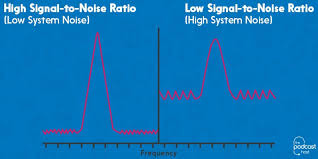
The best heuristic I have for SF is it has a lot of interesting signal, but it has so much noise that it is often impossible to decipher. This graph isn’t perfect, but the Midwest has effectively zero noise. But it’s signal isn’t that high either. Everyone in the Midwest lives similar, great, comfortable lives and with generally similar, common, defensive industries. And they do their job well.
People in San Francisco, like it’s tech scene, are defined by their differences. Everyone is working on their own unique thing. And most of the time it’s nonsense and pomp, but sometimes the boldness pays off big.
But I like the midwest’s stability and normalcy for most things. Even the barbers in SF are always trying to do their unique thing to my hair and the last guy’s special note was that he didn’t use scissors, he’s been cutting hair with just a razor-blade. “It’s my signature.” The other guy wanted to put a sharp line in my eyebrow, which would have made me look like a wannabe rapper.
I’m so exhausted with this side of San Francisco. Please just cut my hair. Not everything needs to be art and new and unique. I’m fearful that I may have become more of an artist than a pragmatic executor as of late.
Innovation
As the births of living creatures, at first are ill-shapen, so are all innovations, which are the births of time. Yet not-withstanding, as those that first bring honor into their family, are commonly more worthy than most that succeed, so the first precedent (if it be good) is seldom attained by imitation.
- Francis Bacon, Innovation
Doing new things is very difficult. You may think that the birth of a new invention comes out beautiful, and there is some true beauty in new creations that come from the heart and when creativity strikes. But often times, it is deranged and there is a lot of work to come after. If I look back on product iterations, they are ugly and unimpressive. While they have improved, the learning is that the changes are not additive. They are constant versions of ripping the old thing apart and building anew. Sam Schapiro of Spiral Works says about creativity and innovation,
“With this in mind, how does scientific knowledge actually grow? It is tempting to think of science as a steady accumulation of facts, brick upon brick, until the edifice of knowledge is built. Yet history reveals something more radical: old frameworks are overturned, sometimes violently, and become replaced by new ones.”
San Francisco was very important for me. This city has shown me how to build. It has brought me to the frontier of technology—the top of the mountain that I can see the future from. But I’ve seen great people build great businesses at Shaper. Eventually an idea leans into an execution framework and a simple business, ideally while always maintains a force of innovation and boldness in the culture.
A product is like a sales pitch in the early days. You only have 5 seconds to capture someone’s attention. You should make sure the value is simple and dense. But even figuring out what that simple value is requires boldness first followed by learnings as much as you can from your users.
And so it is helpful to view your product as a shape. A shape that can be transformed, pruned, added onto, butchered, refined, pressed, and anything that comes with the constant direction of moving towards its unattainable but ideal end form.
Creativity is a Different Kind of Hard
Paul Graham also talks of hard work. He speaks of Bill Gates, who supposedly never took a day off in his 20s. He brings up an important point on working hard. And one that I remember resonating with me in college. That it matters what you direct your focus towards. I had worked very hard up until that point. Then it started to loom over me that there was no virtue in working hard. I started to think very hard about what I worked hard on.
I’m still trying to understand what it is about these passages that I feel in my work at this moment. There is a big difference between creativity and taste and relentless brute force hard work.
“Trying hard doesn't mean constantly pushing yourself to work, though. There may be some people who do, but I think my experience is fairly typical, and I only have to push myself occasionally when I'm starting a project or when I encounter some sort of check. That's when I'm in danger of procrastinating. But once I get rolling, I tend to keep going.
What keeps me going depends on the type of work. When I was working on Viaweb, I was driven by fear of failure. I barely procrastinated at all then, because there was always something that needed doing, and if I could put more distance between me and the pursuing beast by doing it, why wait? Whereas what drives me now, writing essays, is the flaws in them. Between essays I fuss for a few days, like a dog circling while it decides exactly where to lie down. But once I get started on one, I don't have to push myself to work, because there's always some error or omission already pushing me.”
My entire life up until recently, I feel I have been so focused on working hard for the sake of working hard, that it hurts me that sometimes now my best ideas come from not working at all but simply stepping away from the code and going for a walk or vacation for a week. I used to be able to sit in my room for days just executing. Now I feel that this is not a virtuous activity for its own sake.
Now, when there is taste involved in what to build and what to destroy, I similarly find myself circling. I find myself restless, searching for something… I don’t know what it is, but I know that true creation comes from within and that I can find inspiration from the world to pull it out of me. So as a result I buy plane tickets to my home in the Midwest, can’t find it, go camping with my family, can’t find it, stay with a friend in Chicago, can’t find it, get an AirBnB in Lincoln Park, can’t find it, go back to my workspace in SF, can’t find it, go back to my apartment in Hayes Valley, can’t find it. All the while, in this time, nothing is getting done. But I fear that if I go back to working on the project before whatever is found, the wrong thing will get done. It is exhausting in a way that is not like the panting after a race, but the restlessness in not being able to find that killer investment opportunity or writer’s block.
Exhausted
I have been so exhausted lately, not only by SF, but also from this search. I’m trying to pin down the reason with myself. The only reason I can write this essay now is because I think I’m getting somewhere.
1. Exhausted by the energy required for boldness
It is true that I sometimes feel exhausted putting out a new feature. The humbling experience of engineering it is a force that kills boldness and momentum. This exhaustion is somewhat of a microcosm of how I feel generally about this work. There is now a lot of complexity in the product and business. Customers requesting features, the code has become massively complex, there is so much to juggle and so little time. I am spreading myself thin.
Boldness requires faith. But faith is never certain. You can only invest so much time and energy into something where the risk:reward ratio doesn’t make sense.
And as constant various demands build up, the energy required for execution is toxic towards what is required for being able to step out from oneself and imagine what can be that isn’t.
2. Exhausted by structure
I’ve felt this way in the past working at companies and school. Drowning in others’ structure. In some ways, I started a company so that I can live in my own pure structure. But now I am drowning in my own. Of course, you always need to make decisions and commitments in life, in relationships, in where to live. And it is usually the case that after these decisions, you feel a sense of relief. This time, I am closer to who I am and who I want to become.
But we never truly become self-actualized. Many seem content with their lives and have not changed much. There is something about my character that cannot fathom this. By the time I’ve lived somewhere for a year, the walls begin to close in on me. I have a constant internal need to reinvent myself. Whether that is to move to New York and be a finance professional, to become a machine learning engineer, to learn product. It must be the case that this is just an unavoidable process of searching for something. In order to be bold and go outward, we need to imagine that there is something more and relieve ourselves from structure to find it.
Whenever I move somewhere, I also get rid of most of my possessions. It is a liberating feeling to not be tied down to the person you were yesterday. To start with a blank page to write your own narrative. Because reinvention is not additive, it comes from ripping out what is old and building anew.
3. Exhausted by lack of structure
It can be true that you can be held down by structure but also recognize the need for pure structure in one’s life. Amidst all of my change, I always come back to visit friends and family. I still have preferences and beliefs that I will not budge on.
The key is in creative destruction. In going through every line item on a monthly statement and asking what is good and right vs what is bad and unimportant. This requires a level of honesty and thoughtfulness. A product can usually be simpler. A an important learning is to remember to forget so that you can clear the way for adding better structure to accomplish your aims.
4. Exhausted by others
I expected to come home and feel refreshed by removing myself from the bubble that is San Francisco. However, I only replaced this with the cultural bubble that is Chicago.
Nowadays, as I have strayed further from what is normal in the world, I feel an intense dread from returning to society. The most amplified case of this is in opening up LinkedIn. I was a LinkedIn hardo in college. Now, I feel a repulsiveness from it. And not in some high-horse way, it just honestly brings me dread. LinkedIn is where people go to posture. LinkedIn just feels like a giant conformity machine at this point to me. When trying to step out of the box, it feels like it is toxic to doing unlikely things. It becomes harder to convince people of your view, and it is just exhausting trying to.
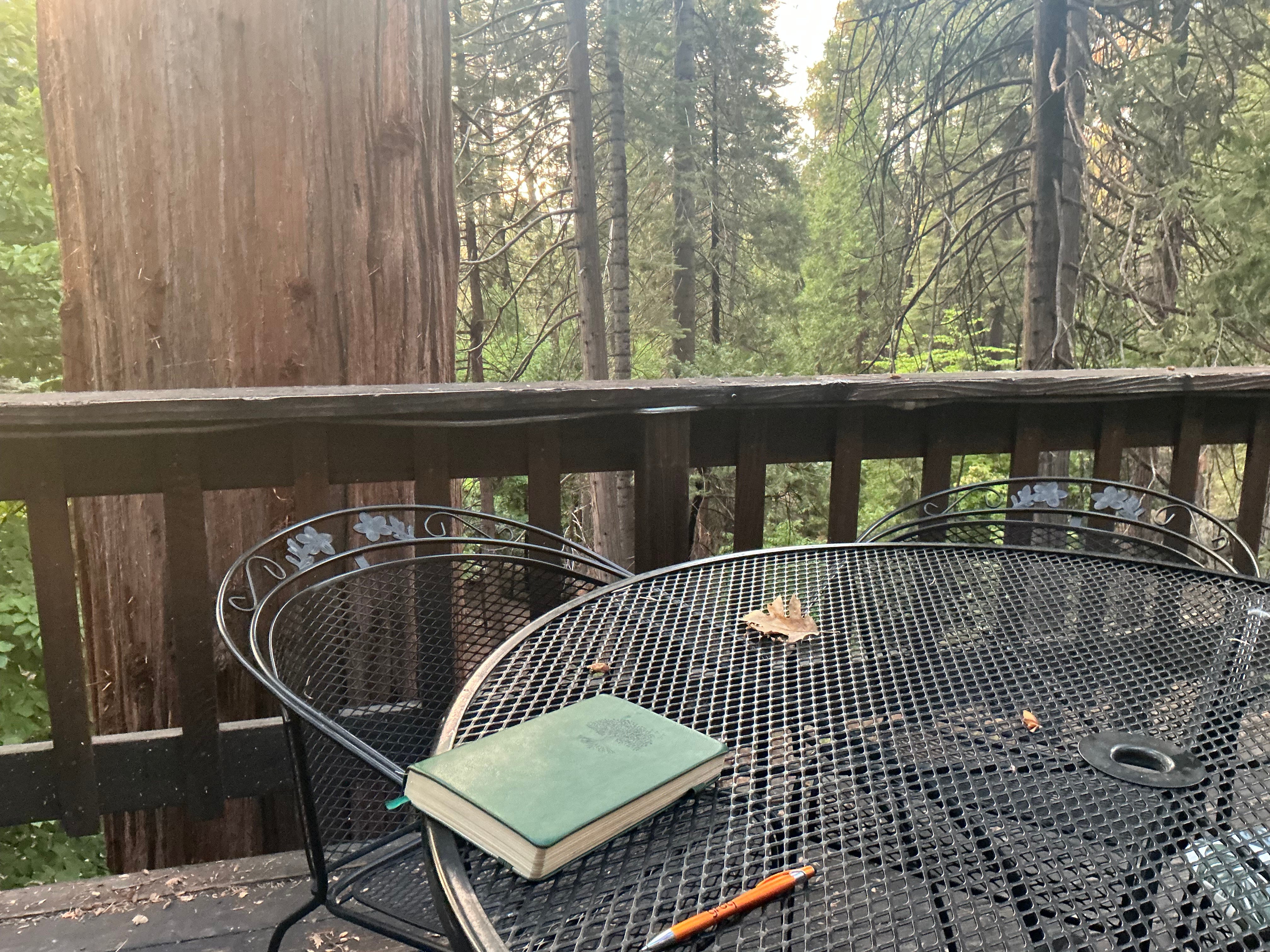
After searching for so long across the Midwest and San Francisco, this weight only started becoming relieved as I got a place in the woods 3 hours outside of the city all to myself. As I drove further from civilization, the dread started becoming relieved. I have always needed space, but this has has been amplified lately.
As I said earlier, I feel like it is always important to be in touch with where the culture is at. I get 1,000s of emails about hackathons happening in the city. But at this point, they have only become a distraction. I know exactly what I need to build and the city is just getting in the way.
Youth
All of this is not to say I have not made my mistakes. Bacon pierces me in the heart with his perception of the failures of youth.
“But reposed natures may do well in youth. As it is seen in Augustus Cæsar, Cosmus Duke of Florence, Gaston de Foix, and others. On the other side, heat and vivacity in age, is an excellent composition for business.
Young men are fitter to invent, than to judge; fitter for execution, than for counsel; and fitter for new projects, than for settled business. For the experience of age, in things that fall within the compass of it, directeth them; but in new things, abuseth them.
The errors of young men, are the ruin of business; but the errors of aged men, amount but to this, that more might have been done, or sooner. Young men, in the conduct and manage of actions, embrace more than they can hold; stir more than they can quiet; fly to the end, without consideration of the means and degrees; pursue some few principles, which they have chanced upon absurdly; care not to innovate, which draws unknown inconveniences; use extreme remedies at first; and, that which doubleth all errors, will not acknowledge or retract them; like an unready horse, that will neither stop nor turn. Men of age object too much, consult too long, adventure too little, repent too soon, and seldom drive business home to the full period, but content themselves with a mediocrity of success.”
Yeah… I’ve done a lot of that. I do feel happy with where I am today, what I have accomplished, and who I have become. But there is much to do this time around in taking bold actions and their respective learnings and turning them into a thoughtful clean machine.
Stalemate
In fact, I feel exactly how I felt earlier on with being a bold individual with a stalemate. A builder’s block held down by the structure of who they were yesterday.
But this block has ended. The only way forward is clearly radical transformation. And this first requires destruction.
Arnold, CA
Winning
One question is if I pursued this all for freedom, how compatible is that with winning. Winning often times requires putting your life on hold to maximize the value being provided to others. I do think that in order to do great work, you need to align your work with yourself, and that means sacrificing the immediate demands of the market. However, in order to bridge that work into reality, you need to start leaning away from this selfish behavior. I’m not sure how to win both removing oneself from the noise and also running into it full-force. With many things, perhaps there is a balance.